
Night Guards in Pine Beach, NJ
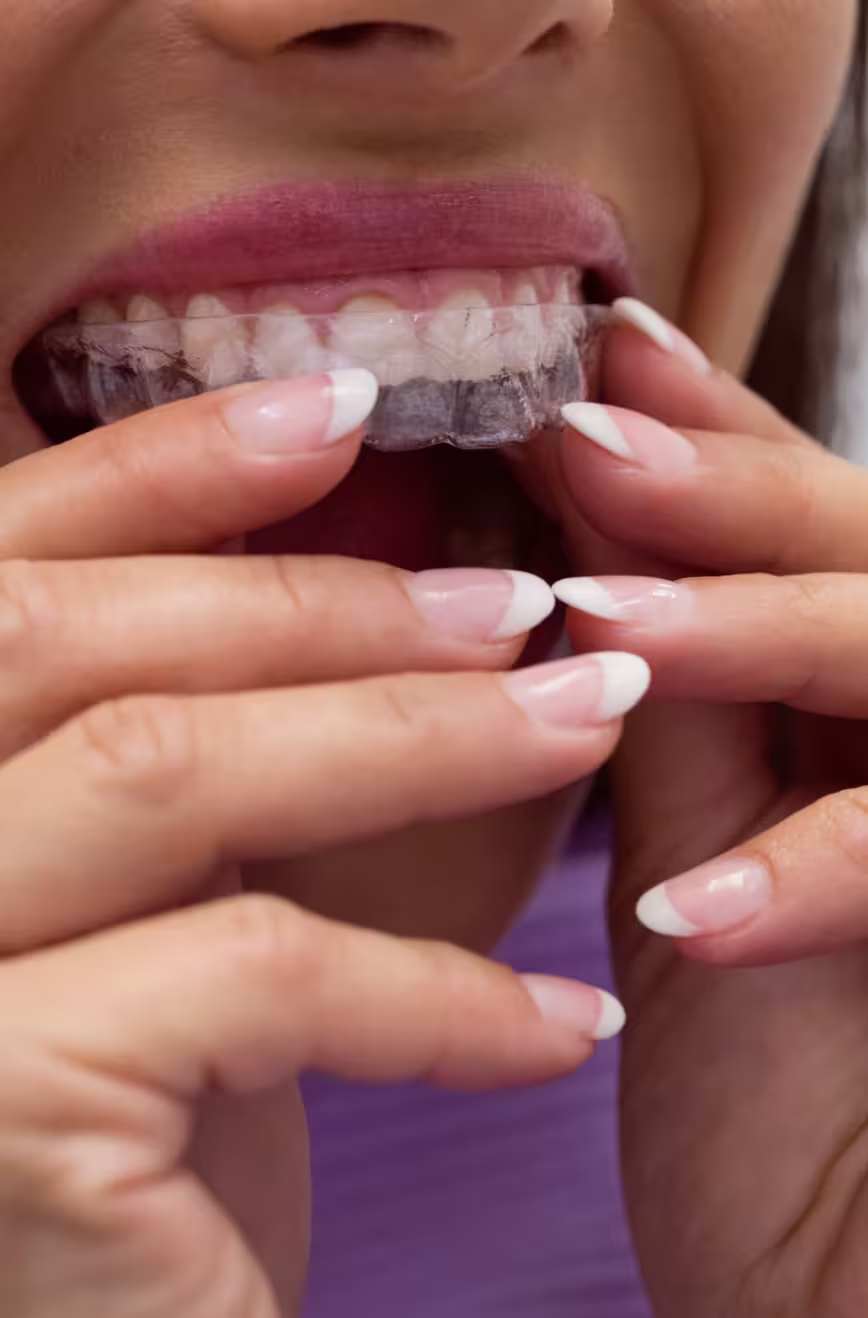
If you suffer from bruxism, our dentist can provide night guards to protect your teeth and relieve joint pain while you sleep. Dr. Mariya Medlenov will help custom fit them to your teeth so that you can feel comfortable and sleep better at night. If you suffer from grinding teeth, call Century Dental East at 732-341-6010 to learn more about our night guards in Pine Beach, New Jersey.
A night guard is a special type of mouth guard that is used to treat bruxism, or teeth grinding and clenching. If our dentist or team suspect that you suffer from bruxism, we may recommend a night guard to protect your teeth from damage and prevent teeth grinding while you sleep. Many people who suffer from bruxism are unaware of the condition because it occurs while they sleep. Common signs of nighttime teeth clenching and grinding include:
- Chronic jaw pain, facial pain and ear pain
- Awakening with a tired or tight feeling in the jaw
- Frequent tension headaches and migraines
- Excessive tooth wear, leading to chipped, flattened, cracked or very worn teeth
- Extremely worn tooth enamel, exposing the inner layers of the tooth
- Indentations on the side of the tongue
- Increased tooth sensitivity
If you notice the signs of bruxism, you may benefit from a custom night guard. This night guard will be made to fit your smile comfortably and effectively, allowing you to sleep peacefully while protecting your teeth. We invite you to contact us today to learn more about night guards and how we can prevent the negative effects of teeth grinding. We are dedicated to providing the best possible care for your smile.
Signs of Teeth Grinding You Can Notice at Home
Most teeth grinding happens during sleep, so the first clues usually show up in how you feel during the day.

What patients in Pine Beach tend to describe
Bruxism is rarely something you catch yourself doing. Patients more often come in because a partner hears the grinding, or because of a symptom that has slowly become normal to them. Any of the following is worth mentioning at your next visit.

Morning jaw tightness. The jaw feels tired, stiff or sore when you wake, and eases as the day goes on.
Recurring headaches. Tension headaches around the temples, sometimes with ear or facial pain on one side.
Worn or chipped edges. Front teeth that look flattened, or small chips and cracks appearing without an obvious injury.
New sensitivity. Enamel thins under repeated pressure, exposing the layer beneath and making teeth react to hot, cold or sweet.
Marks on the tongue or cheek. Scalloped indentations along the side of the tongue, or a ridged line inside the cheek.
Grinding is often noticed first during a routine dental exam, because the wear pattern on the teeth tells a story before symptoms do. If a tooth has already cracked or worn through, treatment may involve a dental crown to rebuild it before a guard is fitted.
Custom Night Guard vs. a Drugstore Mouthguard
Both are made of plastic. That is roughly where the similarity ends.
Why fit changes what the guard can do
An over-the-counter guard is shaped to an average mouth, or softened in hot water and bitten into. It covers the teeth, but it does not control how the upper and lower teeth meet. A guard that sits unevenly can shift your bite, encourage more clenching, or simply fall out during the night.
Even contact.
A custom guard is built so pressure spreads across the arch instead of loading one or two teeth.
Correct thickness.
The material is chosen for how heavily you grind, rather than one thickness for everyone.
It stays put.
A guard made from an impression of your own teeth does not need to be held in place by biting down, which is what makes many boil-and-bite guards uncomfortable.

It lasts.
Store-bought guards wear through quickly under real grinding forces; a lab-made guard is designed for nightly use over years.
The same principle applies to protective appliances generally, which is why a custom sports guard is fitted the same way rather than bought off a shelf.
How a Night Guard Is Fitted at Our Pine Beach Office
Two short visits, with no drilling and no numbing involved.
What to expect
Dr. Mariya Medlenov starts by looking at the wear on your teeth and how your jaw moves, which shows where the grinding forces are concentrated. If a night guard is the right answer, an impression or scan of your teeth is taken and sent to the lab that makes the appliance.
Assessment. Examining tooth wear, jaw muscles and bite, and ruling out other causes of the pain you have described.
Impression. A model of your upper and lower teeth, taken in a few minutes.
Delivery and adjustment. At the second visit the guard is checked in your mouth and adjusted so it feels balanced when you bite. Small adjustments here make the difference between a guard you wear and one that sits in a drawer.
Follow-up. Your guard is checked at routine visits, alongside your dental cleaning, so wear can be caught before it becomes a hole.
Caring for Your Night Guard
Simple habits that keep it clean and in shape
A night guard spends hours in your mouth, so it needs the same attention you give your teeth. Cared for properly, it stays clear, odor-free and effective.
Rinse and brush it each morning. Cool water and a soft brush; hot water can warp the material and change the fit.
Let it dry. Store it dry in its ventilated case rather than sealed while damp.
Keep it away from heat. Not on a windowsill, in a car, or in the dishwasher.
Bring it to your visits. We can check the fit and clean it, and see how quickly it is wearing down, which tells us something about how the grinding is changing.
Talk to us about night guards in Ocean County
If you wake with a sore jaw, or someone has told you that you grind your teeth, a night guard is a straightforward way to protect the teeth you have. Call Century Dental East at (732) 341-6010 or contact our Pine Beach office to arrange a consultation with Dr. Mariya Medlenov.
Visit Our Pine Beach Office
Century Dental East — Gentle, Modern Dentistry for Families in Pine Beach, NJ.
241 Washington Avenue, Pine Beach, NJ 08741
(732) 341-6010


Hours
Mon 9:00 a.m. – 6:00 p.m.
Tue 9:00 a.m. – 7:00 p.m.
Wed 9:00 a.m. – 5:00 p.m.
Thu 9:00 a.m. – 5:00 p.m.
Fri-Sun Closed
Serving patients across
- Toms River
- Lakewood
- Lakehurst
- Forked River
- Bayville
- Beachwood
- Pine Beach
- Barnegat Light
- Ocean Gate
- Maple Shade
- Leisure Village
- Cedar Grove
- Waretown
- Howardsville
- Brookville
- Holly Park
- South Toms River